03 / 11 / 2026
When talking about coffee, we often come across terms such as light, medium and dark roast. But how does roasting work? And, more importantly, does a darker roast necessarily mean a stronger coffee? The answer depends on the type of coffee and the result you want to achieve in the cup.
Roasting does more than simply give the beans their colour: it is the stage at which many of the aromas that define the coffee develop. Let’s take a closer look and explore the differences between the various roast levels.
Light, Medium or Dark Roast: what changes?
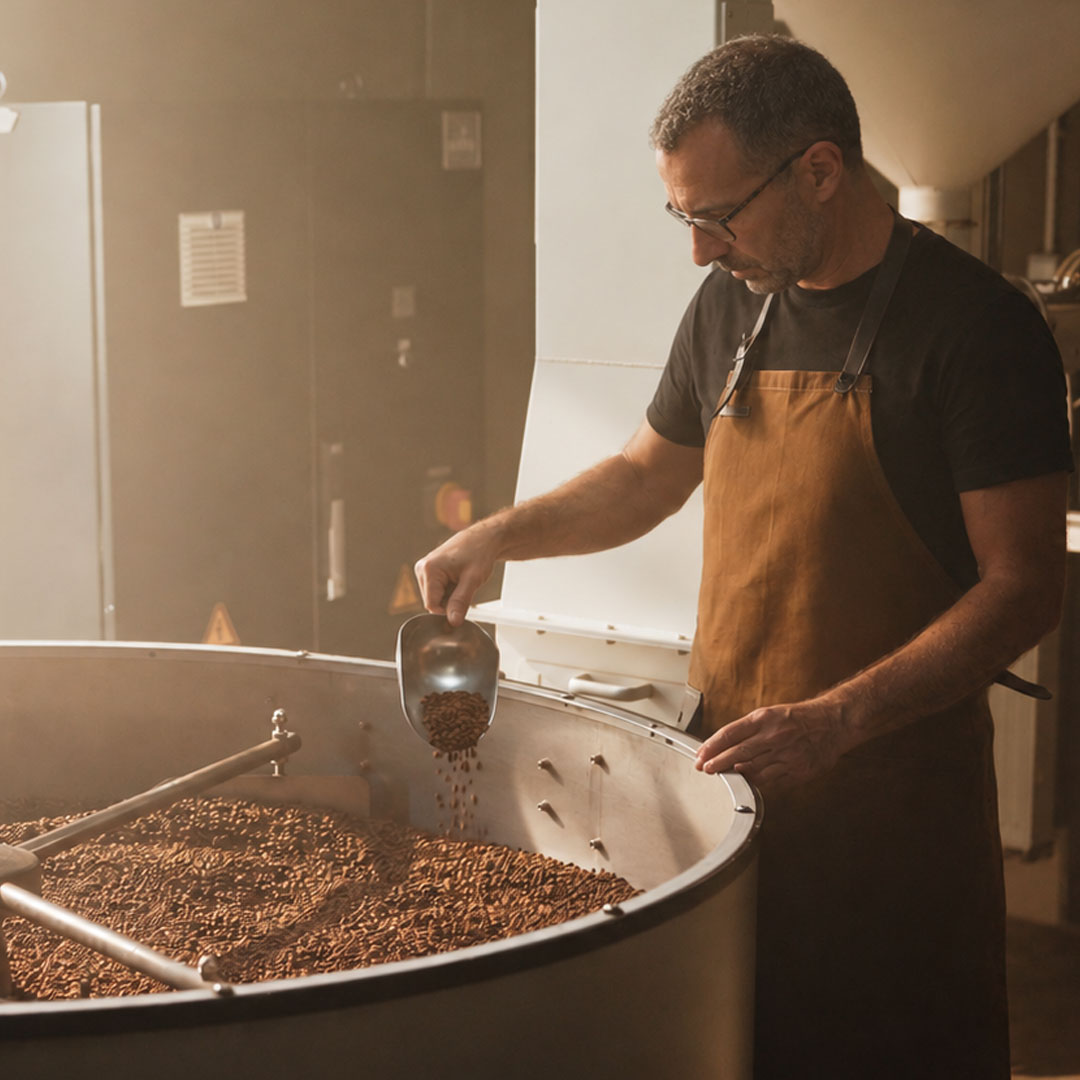
During roasting, green coffee beans are exposed to heat and gradually change in structure, colour and aromatic characteristics.
A light roast tends to bring out the coffee’s original characteristics, with possible fruity and floral notes and more noticeable acidity. It is particularly popular in some Northern European countries and in the specialty coffee world. This type of roast may also bring out herbal, hay-like or green-wood notes.
A medium roast generally aims for a better balance between the coffee’s origin characteristics and the aromas developed through heat. Notes of nuts, cocoa, caramel and spices may emerge, alongside good aroma and a lasting finish.
A dark roast, on the other hand, brings the flavours associated with the roasting process to the forefront, such as cocoa, chocolate, spices and toasted notes. This profile has traditionally been especially popular in central and southern Italy, where espresso with a bolder flavour and longer finish is often preferred.
But be careful: dark roast does not mean burnt coffee. Excessive roasting can mask the characteristics of the raw beans and produce bitter, charred flavours. The quality of the green coffee and the roaster’s skill are therefore essential.
Are Roast Level and Intensity the Same Thing?
A dark roast can contribute to a bolder, more roasted flavour profile, but perceived intensity depends on many factors: the blend, the coffee origins, the proportion of Arabica and Robusta, the grind size and, above all, the brewing method.
That is why the colour of the beans alone is not enough to tell how “strong” a coffee will taste.
The Latorre Philosophy: Roasting Each Origin Separately
For Latorre, roasting is a process tailored to each individual coffee origin.
The different origins that make up our blends are roasted separately, allowing us to bring out the characteristics of each coffee before combining them.
But the work does not end with roasting.
Once blended, the coffee needs time to rest and mature. Coffee continues to evolve even after roasting, and this resting period allows the aromas of the different origins to harmonise.
This is one of the most important aspects of the Latorre method: it is not simply a matter of bringing different coffees together, but of allowing a balance of aroma, flavour, body and finish to develop over time.
In general, there is no single “best” roast. There is only the roast best suited to bringing out the qualities of a particular coffee and creating the desired flavour profile.
Those who enjoy delicate aromas may prefer a lighter roast; those looking for balance may opt for a medium roast; and those who prefer an intense espresso with a lasting finish may find their ideal profile in a dark roast.
The real difference, however, lies in the roaster’s craft: understanding the beans, roasting each origin in the most suitable way and giving the blend the time it needs to express itself at its best.
Discover our blends — Latorre, Haway and 70° — and find the one that suits you best!